Oil and gas industrial cybersecurity NGFW dashboard Kuwait
Industrial OT/ICS Cybersecurity — Kuwait

Oil & Gas Cybersecurity Kuwait

UltraTech Kuwait secures refineries, drilling sites, pipelines, SCADA networks, and remote oil fields with practitioner-led OT security — IEC 62443-aligned segmentation, NGFW deployment, SOC monitoring, and incident response built for petroleum operations in Ahmadi, Mina Al-Ahmadi, and Kuwait's industrial corridors.

OT/ICS Practitioners
IEC 62443 Aligned
NGFW & SOC Design
Kuwait Petroleum Sector

Kuwait's Petroleum Cybersecurity Authority Resource

Oil and gas facilities in Kuwait operate some of the region's most connected critical infrastructure — DCS and SCADA in refineries, RTU clusters along pipelines, VPN links to remote wellheads, and corporate IT on the same national fiber backbone. A generic IT security vendor that only patches laptops cannot protect a distillation column controller or a Modbus segment shared with a misconfigured guest WiFi.

UltraTech Kuwait has delivered network, ELV, firewall, and infrastructure projects since 2015 — including environments serving Kuwait's energy, logistics, and industrial base. Our engineers export firewall policies, map VLANs, and review Active Directory and SCADA conduits on site, not only from remote dashboards.

This page is the operational guide we wish every petroleum facility had before a ransomware event or OT incident: how to segment, what to monitor, which standards apply, and how incident response differs when a distillation unit HMI is in scope.

Whether you operate in Shuaiba, Mina Abdullah, West Kuwait fields, or corporate offices in Ahmadi, the same principles apply — identify crown-jewel OT assets, constrain IT-to-OT paths, log what matters, and rehearse recovery without risking unplanned process trips.
Refinery Cybersecurity Kuwait

Refineries combine continuous process units, tank farms, loading racks, and laboratory networks with corporate IT and vendor remote access. Refinery cybersecurity in Kuwait must protect DCS, safety instrumented systems (SIS), and historian databases while allowing controlled maintenance windows for patch management.

Process area network protection

We implement Purdue Level 2–3 segmentation between control rooms, field cabinets, and business networks — with NGFW conduits that inspect industrial protocols where supported and deny-by-default rules everywhere else.

  • DCS and SIS network zone isolation
  • Engineering workstation hardening and jump hosts
  • Vendor VPN with time-bound access and session recording
  • Anti-malware strategy compatible with OT change control
  • Backup validation for HMI and engineering images
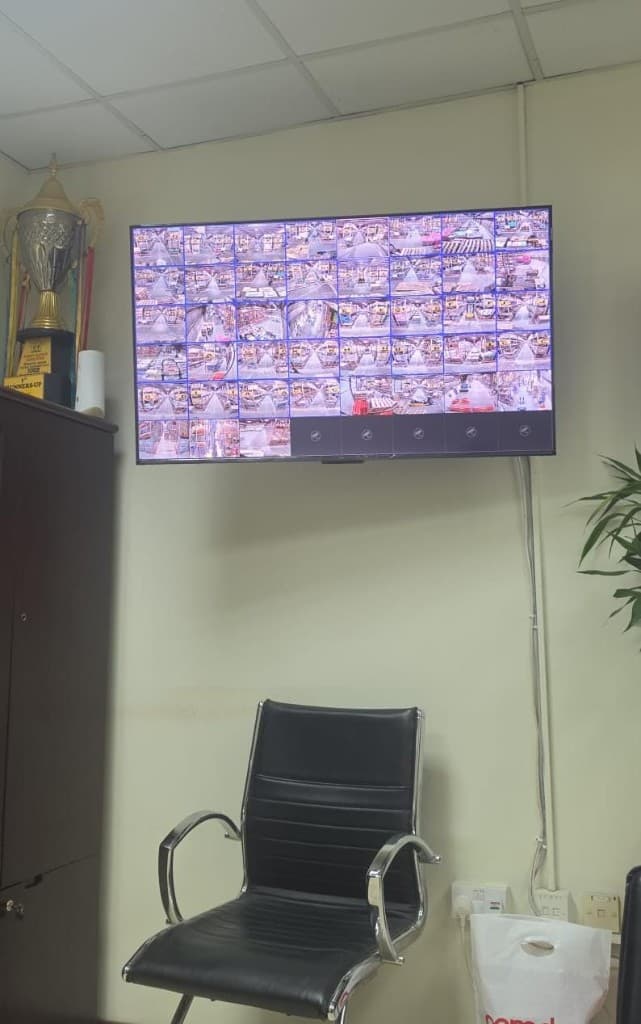
  • Integration with physical access and CCTV at control buildings

Downstream-specific risks

Loading terminals and custody transfer systems are frequent targets for fraud and disruption. We extend monitoring to terminal LANs without bridging them to process control VLANs.

  • Terminal operations network segmentation
  • DMZ for external partner data exchange
  • Encrypted links to corporate ERP boundaries
  • Security logging aligned to SIEM retention policies

Drilling Site Security

Drilling rigs and workover sites in Kuwait rely on satellite, microwave, or cellular backhaul with intermittent bandwidth. Drilling site security must prioritize availability — a misconfigured scan can stall real-time drilling data feeds.

Rugged edge security

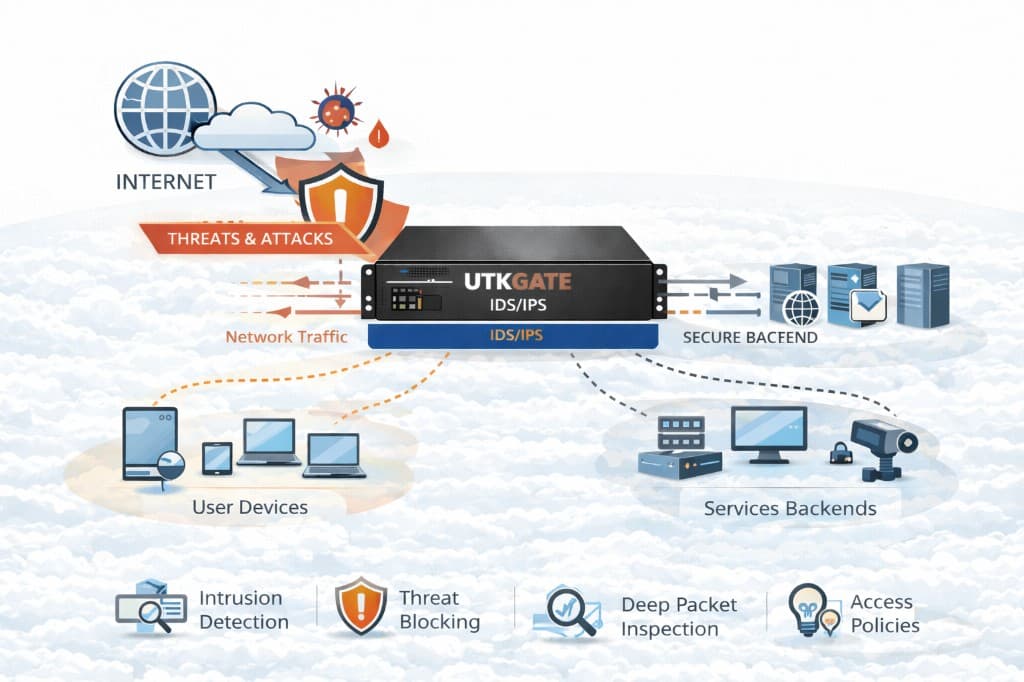
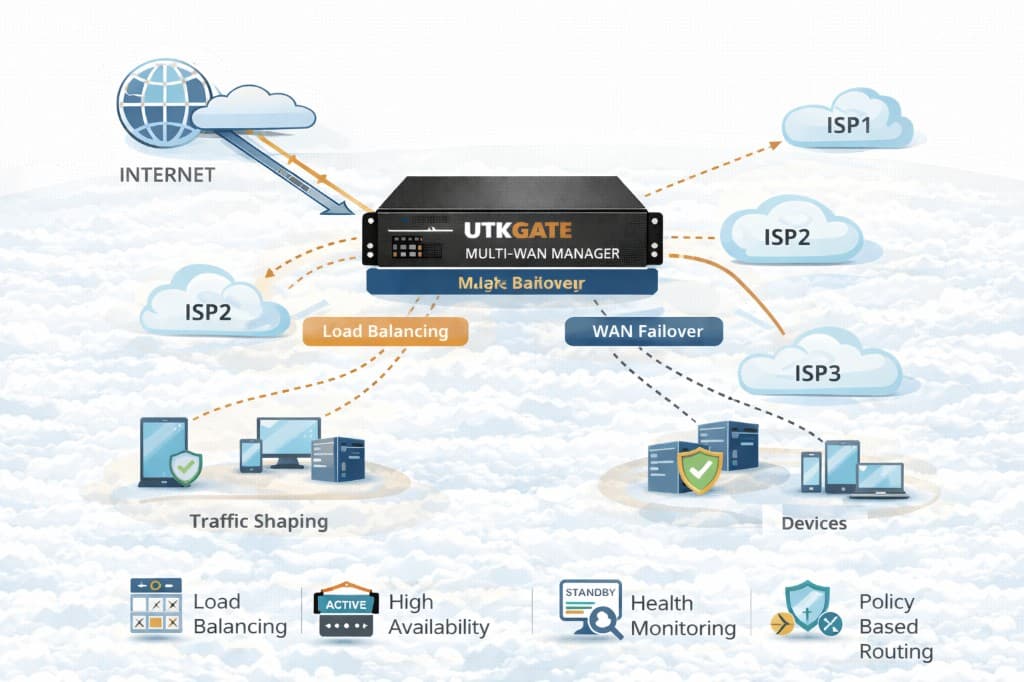
We deploy UTKGate and industrial-grade firewalls at edge locations with multi-WAN failover, bandwidth QoS for critical SCADA traffic, and IDS/IPS tuned to reduce false positives on high-latency links.

  • Edge NGFW with 4G/5G and satellite failover
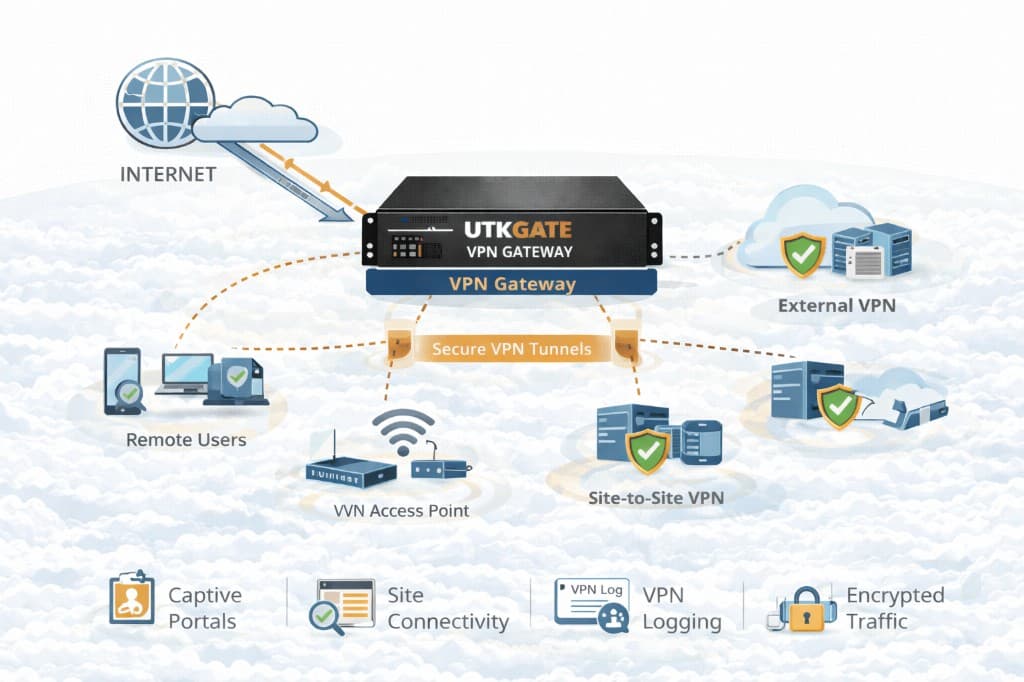
  • VPN tunnels to operations centers with MFA
  • Local logging with store-and-forward to SOC
  • Hardened WiFi for rig crew vs operations VLANs
  • Portable kit security for workover campaigns

Remote rig connectivity

Documented oilfield NGFW deployments in Ahmadi demonstrate how Kuwait operators stabilized VPN uptime and contained threats — see our published oilfield services case write-up linked below.

  • Certificate-based VPN for vendor toolchains
  • Split tunneling policies reviewed quarterly
  • Endpoint baseline for mud-logging and directional tools

Pipeline Network Security

Pipeline operations depend on RTU/PLC telemetry along right-of-way fiber or wireless hops. Pipeline security means protecting telemetry integrity and command authenticity — not only corporate email.

Midstream telemetry protection

We segment compressor stations, block valve sites, and SCADA master stations. Unidirectional gateways or data diodes are recommended where regulations or internal policy require one-way historian replication.

  • RTU network micro-segmentation
  • Modbus/TCP and DNP3 conduit controls
  • GPS and telecom path diversity documentation
  • Leak detection system network isolation
  • Emergency shutdown link integrity monitoring

Integrity monitoring

Anomaly detection on flow and pressure data complements cyber controls — we integrate syslog and NetFlow from pipeline RTU aggregators into centralized monitoring.

  • Baseline communication patterns per RTU cluster
  • Alerts on new masters or unauthorized write commands
  • Field laptop imaging and USB control policies

SCADA Security Kuwait

SCADA systems aggregate field data into operations dashboards and often bridge to business planning. SCADA security Kuwait projects fail when IT teams apply office patch cycles to HMIs running legacy Windows builds required by vendors.

SCADA-specific controls

We inventory SCADA servers, historians, OPC bridges, and remote terminal units — then map allowed protocol flows and maintenance paths.

  • SCADA server hardening baselines
  • OPC UA / classic OPC conduit restrictions
  • Historian replication via one-way or inspected paths
  • Role-based access for operators vs engineers
  • Change management integration for logic downloads
  • Secure remote viewing without flat RDP exposure

SCADA threat monitoring

Dedicated OT sensors or SPAN ports feed IDS signatures for industrial protocols; correlated with IT SIEM for cross-domain incidents.

  • Passive monitoring taps on SCADA core switches
  • Alerting on firmware changes and new ladder logic uploads
  • Integration with maintenance outage calendars

ICS & OT Security

Industrial Control System (ICS) security spans PLCs, DCS, RTUs, safety controllers, and the engineering laptops that program them. ICS security in Kuwait's petroleum sector requires joint governance between CISO, operations, and maintenance.

OT program foundations

We help establish OT asset inventories, zone/conduit diagrams, and patch exception processes approved by operations — the backbone of IEC 62443 programs.

  • OT asset discovery and CMDB alignment
  • Zone and conduit documentation (IEC 62443-3-2)
  • Application whitelisting on critical HMIs where feasible
  • Removal of unnecessary OT internet pathways
  • Dual maintenance: IT SOC + OT operations runbooks

IT/OT convergence done safely

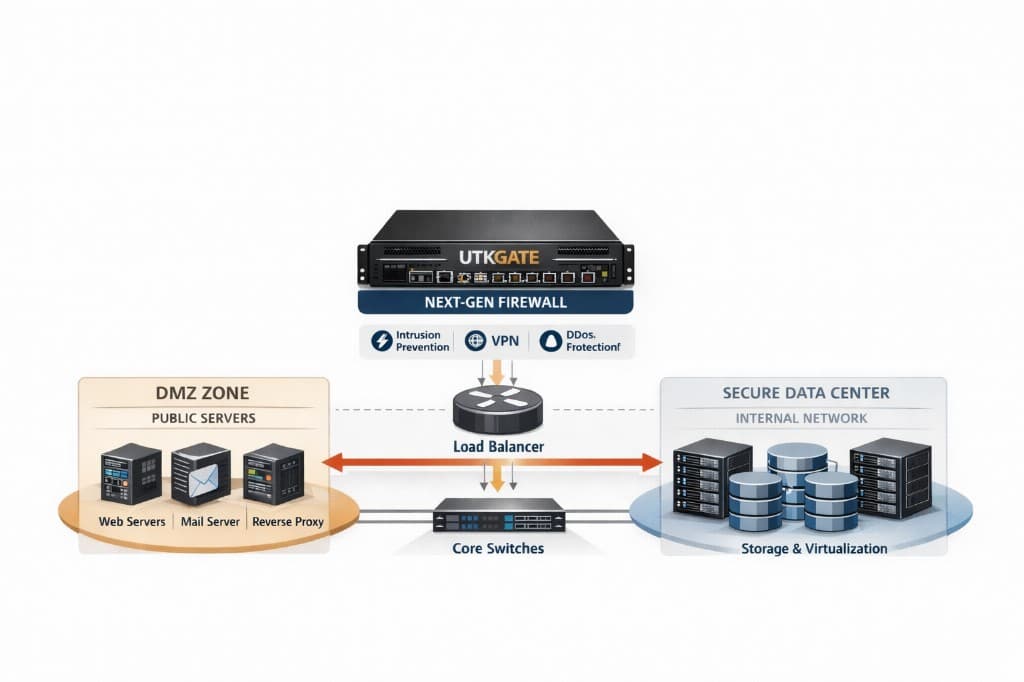
Digital oilfield initiatives increase OT exposure. We design demilitarized zones for analytics platforms pulling OT data without write-back paths.

  • Industrial DMZ for analytics and ML platforms
  • Time synchronization (NTP) security
  • Secure time-bound data exports for partners

PLC Protection

Programmable Logic Controllers execute local control loops — often with decades-long lifecycles. PLC protection focuses on limiting programming paths, enforcing firmware integrity, and detecting unauthorized logic changes.

Engineering access controls

Engineering laptops should not roam freely between corporate WiFi and PLC programming ports. We deploy jump boxes and recorded sessions for vendor access.

  • Dedicated engineering VLAN with MFA jump hosts
  • USB and serial port control on engineering stations
  • Firmware checksum verification after maintenance
  • Locked PLC keys and physical port covers where applicable
  • Vendor remote access via managed PAM solutions

Detection & response

Monitor for new programming connections outside maintenance windows; correlate with work orders.

  • Alerts on PLC mode changes (run/program)
  • Logging of engineering protocol sessions
  • Backup of ladder logic before and after changes

Remote Oil Field Connectivity Security

West Kuwait, North Kuwait, and satellite-linked well clusters depend on resilient remote connectivity. Remote oil field security addresses exposed VPN concentrators, shared VSAT hubs, and unmanned site cabinets.

Edge and backhaul design

Multi-WAN NGFW at field aggregators with cellular backup mirrors patterns proven in Kuwait oilfield NGFW deployments — maintaining VPN stability above 99% uptime targets.

  • Dual-path VPN to operations center
  • Out-of-band management for edge firewalls
  • Environmental monitoring of field comms cabinets
  • Power and UPS monitoring tied to NOC alerts
  • Solar/microgrid site network hardening

Unmanned site physical-cyber alignment

Cybersecurity for unmanned sites pairs with CCTV and access control — see our oil & gas CCTV industry page for integrated physical security.

  • Cabinet intrusion sensors correlated with network events
  • Camera analytics on perimeter breaches
  • Tamper alerts on telecom enclosures

SOC Monitoring for Oil & Gas

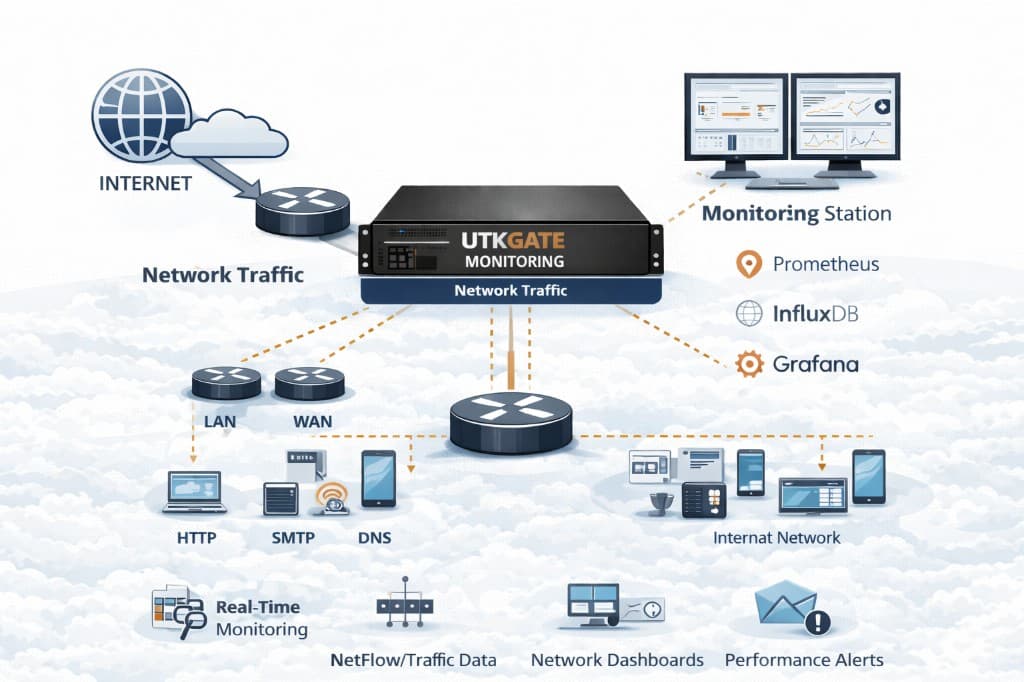
A Security Operations Center for petroleum assets must ingest OT-relevant logs — firewall denies on SCADA VLANs, VPN authentications, engineering session starts — not only Office 365 sign-ins.

Monitoring architecture

We design centralized syslog, NetFlow, and SIEM collectors with OT retention policies. Managed options suit teams without 24×7 dedicated analysts.

  • SIEM use-case library for OT and IT events
  • 24/7 alerting tiers with operations escalation matrix
  • Threat intelligence feeds for energy sector IOCs
  • Dashboards for CISO and plant manager views
  • Quarterly purple-team exercises on critical sites

Managed detection options

UltraTech provides monitoring and firewall management scaled to Kuwait midstream operators and service companies — complementing internal teams rather than replacing operations accountability.

  • Managed NGFW rule reviews and change control
  • Log health monitoring (silent sensor detection)
  • Incident triage with OT-aware playbooks
  • Monthly executive risk summaries

Threat Landscape for Kuwait Petroleum Operations

These are the attack patterns we design controls against — not theoretical slides. Each maps to architecture, monitoring, and response work on live Kuwait facilities.

IT Security vs OT Security in Oil & Gas

Petroleum CISOs and plant managers must govern both worlds. Conflating them causes either production outages from aggressive IT patching or enterprise breaches from flat OT networks.

DimensionIT SecurityOT Security
Primary goalConfidentiality & complianceSafety, availability, integrity of process
Patch strategyRegular automated patchingVendor-approved windows; compensating controls
Downtime toleranceMinutes acceptableUnplanned trips can cost millions / safety risk
Asset lifecycle3–5 year refresh15–25+ years common on PLCs/RTUs
ProtocolsHTTPS, SMTP, SaaS APIsModbus, DNP3, OPC, proprietary fieldbus
Monitoring focusEndpoints, identity, emailProtocol anomalies, engineering access
Incident priorityData breach containmentProcess safety + controlled shutdown paths
OwnershipCISO / ITOperations + maintenance + OT engineering

SCADA Threats

Critical

SCADA environments face scanning from misconfigured IT networks, stolen vendor credentials, and malware that spreads via engineering USBs. Attackers target historians and OPC bridges because they offer bulk data exfiltration paths with weaker authentication than modern SaaS.

Indicators

  • Unexpected OPC sessions or new historian replicas
  • HMI performance degradation during off-hours
  • Unauthorized tag browsing from unknown IP addresses

Controls

  • IEC 62443 zone/conduit design
  • Engineering jump hosts with session recording
  • Passive IDS on SCADA SPAN ports
  • Strict vendor VPN lifecycle management

Ransomware in Oil & Gas

Critical

Ransomware groups target petroleum operators because downtime pressure increases payment likelihood. IT ransomware can spread to OT only when flat networks or domain trusts bridge control rooms — segmentation and offline backups are non-negotiable.

Indicators

  • Mass file encryption on file shares used by OT vendors
  • Disabled backup services on engineering servers
  • Lateral movement from IT helpdesk VLAN to control network

Controls

  • Immutable backups for HMI/engineering images
  • IT/OT AD forest separation
  • Application control on engineering laptops
  • NGFW default-deny between zones

Supply Chain Attacks

High

Compromised software updates, counterfeit PLCs, and trojanized vendor remote tools have affected energy sectors globally. Kuwait procurement teams should validate firmware sources and restrict vendor remote access to jump platforms.

Indicators

  • Binaries signed but from unexpected publishers
  • New services listening after vendor maintenance
  • Outbound connections from OT hosts to unknown geos

Controls

  • Vendor access governance and MFA
  • Firmware hash verification
  • Allow-list for remote support tools
  • Procurement security questionnaires for OT vendors

Insider Threats

High

Contractors, former employees with lingering VPN accounts, and shared engineering credentials remain common in long-running field assets. Insider threats in petroleum settings can alter setpoints or disable alarms — not only steal PDFs.

Indicators

  • Logic downloads outside approved work orders
  • After-hours VPN from terminated contractor accounts
  • Privilege escalation on historian admin roles

Controls

  • PAM for OT admin accounts
  • Session logging on jump hosts
  • Quarterly access recertification with operations sign-off
  • Behavior analytics on engineering protocols

Nation-State Threats

High

Energy infrastructure remains a strategic target for espionage and disruptive capabilities. Nation-state actors invest in long dwell times — living on IT networks while mapping OT — which makes east-west detection inside IT zones critical before they reach Level 2.

Indicators

  • Credential harvesting on executives and project engineers
  • Slow data staging to external cloud storage
  • Custom malware not seen in commercial feeds

Controls

  • Threat hunting on IT identity systems
  • OT network air-gaps or unidirectional exports where policy requires
  • Threat intelligence sharing with sector ISACs
  • Red-team exercises including OT scenarios

Kuwait Operational Scenarios

Representative environments we assess and secure across Kuwait's upstream, midstream, and downstream sectors.

Al Ahmadi

Ahmadi refinery control room IT/OT split

Greenfield segmentation between corporate AD and DCS engineering VLAN with NGFW conduits, jump hosts for vendors, and SIEM use cases for Modbus anomalies.

Mina Al-Ahmadi

Mina Al-Ahmadi terminal SCADA hardening

Terminal operations network isolated from loading SCADA; CCTV and access control integrated for unmanned rack areas.

Shuaiba

Shuaiba industrial area pipeline RTU aggregation

Micro-segmentation at compressor stations with dual telecom paths and centralized logging to operations SOC.

West Kuwait fields

Remote wellhead VSAT + cellular edge

UTKGate multi-WAN at field aggregator — pattern aligned with documented Kuwait oilfield NGFW deployment achieving stable VPN operations.

Ahmadi services sector

Oilfield services camp network (150+ staff)

Managed NGFW replacing consumer routers; IDS/IPS, bandwidth control, and documented incident response — see oilfield services network security case study.

Kuwait City / Ahmadi

Corporate petroleum HQ hybrid cloud boundary

Secure connectivity from on-prem data center to cloud analytics without flat OT routing — DMZ inspection and identity-aware VPN.

Compliance & Industrial Security Standards

We align assessments and remediation roadmaps to frameworks your auditors, joint-venture partners, and equipment vendors recognize.

IEC 62443

International series for industrial automation and control system security. We use 62443-3-2 zone/conduit concepts and 62443-4-1 secure development lifecycle alignment for integrator deliverables.

  • Zone & conduit modeling workshops
  • Security level (SL) target definition per zone
  • Component hardening aligned to SL requirements
  • Supplier security requirement packages

NIST Cybersecurity Framework (CSF)

Identify, Protect, Detect, Respond, Recover — mapped to joint IT/OT governance committees common in Kuwait joint ventures.

  • Current-state CSF profile for petroleum assets
  • Target profile with prioritized gaps
  • Metrics for board and JV partner reporting
  • Integration with existing process safety management

ISO/IEC 27001

Information security management for corporate IT, camp networks, and shared services supporting petroleum operations.

  • ISMS scope including camps and remote sites
  • Risk treatment plans crossing IT/OT boundaries
  • Internal audit support for certification cycles
  • Statement of Applicability guidance for OT exceptions

ISA/IEC 62443 & ISA practices

ISA-style OT governance — asset inventories, change control, and training for operators interacting with cyber-physical systems.

  • OT-specific security awareness for panel operators
  • Engineering change control with cyber review
  • Backup/restore drills for HMIs and historians
  • Coordination with mechanical integrity programs

Reference Security Architecture

Every engagement starts from a documented Purdue model view — where IT ends, OT begins, and which conduits are allowed between levels.

Level 5 — Enterprise

ERP, corporate email, business apps. Full IT security stack, MFA, EDR, email filtering.

Cloud and enterprise edge firewall dashboard

Level 3.5 — Industrial DMZ

Jump servers, patch repositories, antivirus servers, historian replicas — inspected conduits only.

VLAN segmentation and monitoring for industrial networks

Level 2 — Supervisory (SCADA/HMI)

Operations LANs, SCADA servers, engineering stations. Strict east-west controls, no direct internet.

IDS IPS threat prevention on industrial network edge

Level 1 — Control (PLC/RTU)

Field controllers and I/O. No routing to corporate IT; programming paths via approved jump hosts only.

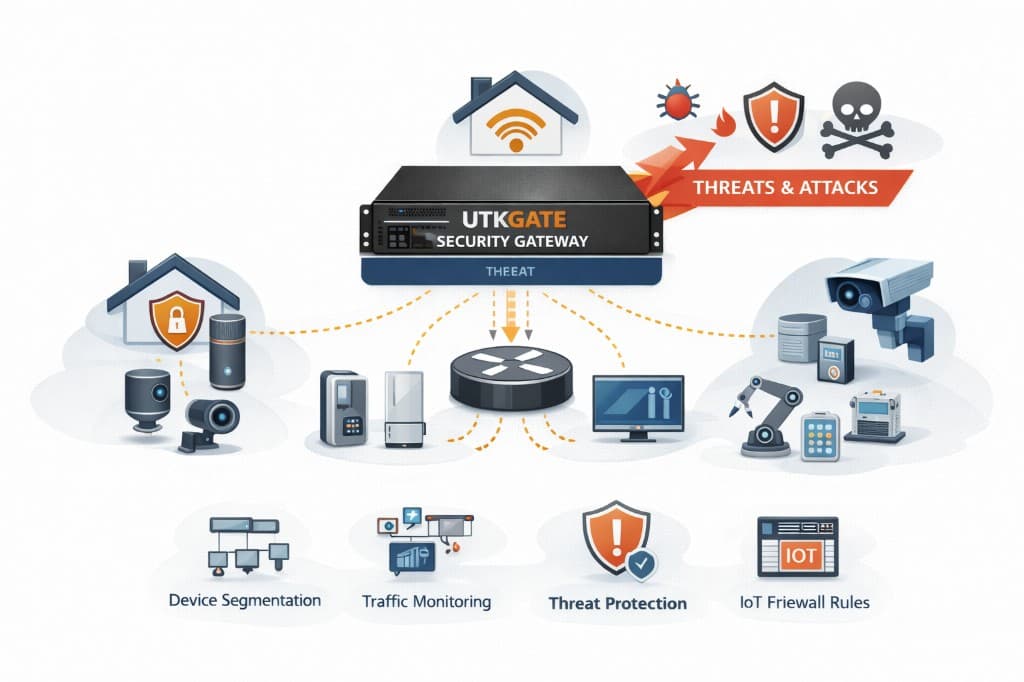
IoT and industrial edge security gateway

Implementation Methodology

OT changes require change windows, rollback plans, and operations sign-off. Our methodology reflects petroleum operating reality.

  1. 1

    Discover

    OT/IT asset inventory, Purdue mapping, data flows, existing firewall exports, vendor access list, and crown-jewel identification with operations workshops in Kuwait.

  2. 2

    Assess

    Gap analysis against IEC 62443 / NIST CSF, vulnerability scanning where safe, passive OT monitoring pilot, and risk register with safety-consequence weighting.

  3. 3

    Design

    Zone/conduit diagrams, NGFW rule baselines, SIEM use cases, jump host architecture, and change windows aligned to turnaround schedules.

  4. 4

    Implement

    Phased segmentation, UTKGate or enterprise NGFW deployment, VPN hardening, logging onboarding, and compensating controls for unpatchable assets.

  5. 5

    Operate

    Managed monitoring options, quarterly rule recertification, tabletop IR exercises with operations, and metrics for continuous improvement.

Incident Response Workflow for OT Environments

Triaging malware on an engineer workstation is not the same as isolating a compromised HMI. We document playbooks per zone.

1

Detect & Triage

SOC or on-call validates OT vs IT scope; notifies operations shift supervisor immediately for OT indicators.

2

Contain (Safety First)

Isolate affected IT segments; avoid abrupt PLC power cycles unless process safety mandates; use pre-approved isolation valves/network taps.

3

Analyze

Forensic imaging of HMIs/engineering stations; PCAP review on industrial IDS; preserve historian logs.

4

Eradicate & Recover

Restore from gold images; rotate credentials; reintroduce zones under change control with operations sign-off.

5

Lessons Learned

Update zone diagrams, SIEM use cases, and JV reporting; align with process safety management reviews.

OT Cybersecurity Audit Checklist (Sample)

Excerpt from our assessment workbook used during refinery, terminal, and field-site reviews.

  • Documented Purdue model diagram dated within 12 months
  • Inventory of all OT assets with owner and criticality rating
  • List of all IT/OT network conduits with business justification
  • Firewall rule review for OT zones (deny-by-default verified)
  • Vendor remote access register with MFA and expiry dates
  • Engineering laptop build standard and USB policy
  • Backup restore test for critical HMIs within last quarter
  • SIEM logging coverage map — no silent OT VLANs
  • Incident response contacts including operations shift lead
  • Anti-malware or compensating control for unpatchable OT hosts
  • Physical security alignment for telecom and control cabinets
  • Security awareness training for operators (phishing + USB)

Risk Assessment Framework

We score likelihood and consequence using asset criticality familiar to process safety teams.

High likelihood · Safety / environmental

Immediate zone isolation design; executive oversight; may require physical process review

High likelihood · Major production loss

Priority NGFW conduit deployment; 24/7 monitoring use cases; tabletop IR within 30 days

Medium likelihood · Data integrity impact

Historian integrity checks; logging enhancements; vendor access tightening

Low likelihood · Camp IT disruption

Standard IT controls; separate from OT change windows

Expertise & Credentials

Practitioner-led engineering

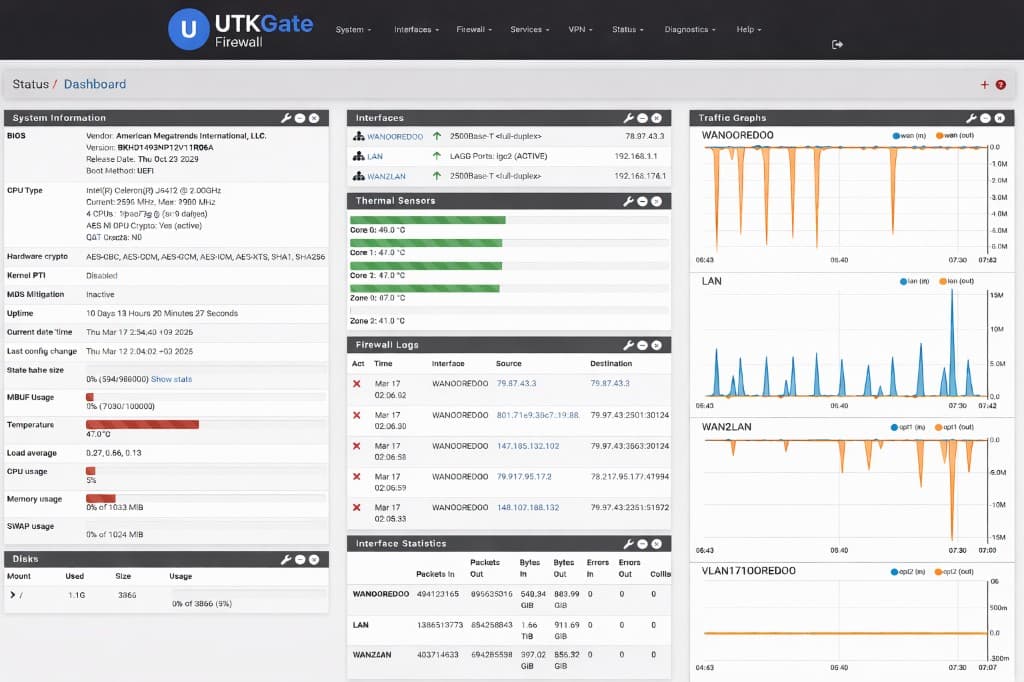
UltraTech engineers configure UTKGate NGFW, VLANs, VPN, and logging on live Kuwait networks — documented on utechkw.com with deployment screenshots and case write-ups, not generic reseller brochures.

Energy sector client experience

Our client portfolio includes organizations serving Kuwait's petroleum and industrial ecosystem — network and security projects delivered from our Fahaheel, Al Ahmadi base since 2015.

Published OT-relevant case studies

Oilfield services NGFW transformation and industrial NGFW deployments are published with measurable outcomes (VPN stability, IDS/IPS, managed SLA) for verification before engagement.

Oil & Gas Cybersecurity FAQ

Technical answers for petroleum IT, OT engineers, and security managers in Kuwait.

Secure Your Petroleum Infrastructure

Book an OT-aware security assessment — network segmentation review, SCADA exposure analysis, and prioritized roadmap for your refinery, pipeline, or field operation.

Assessment deliverables

  • Purdue / zone-conduit map
  • OT asset inventory review
  • Firewall rule gap analysis
  • IEC 62443 / NIST alignment
  • SIEM logging roadmap
  • Prioritized remediation plan